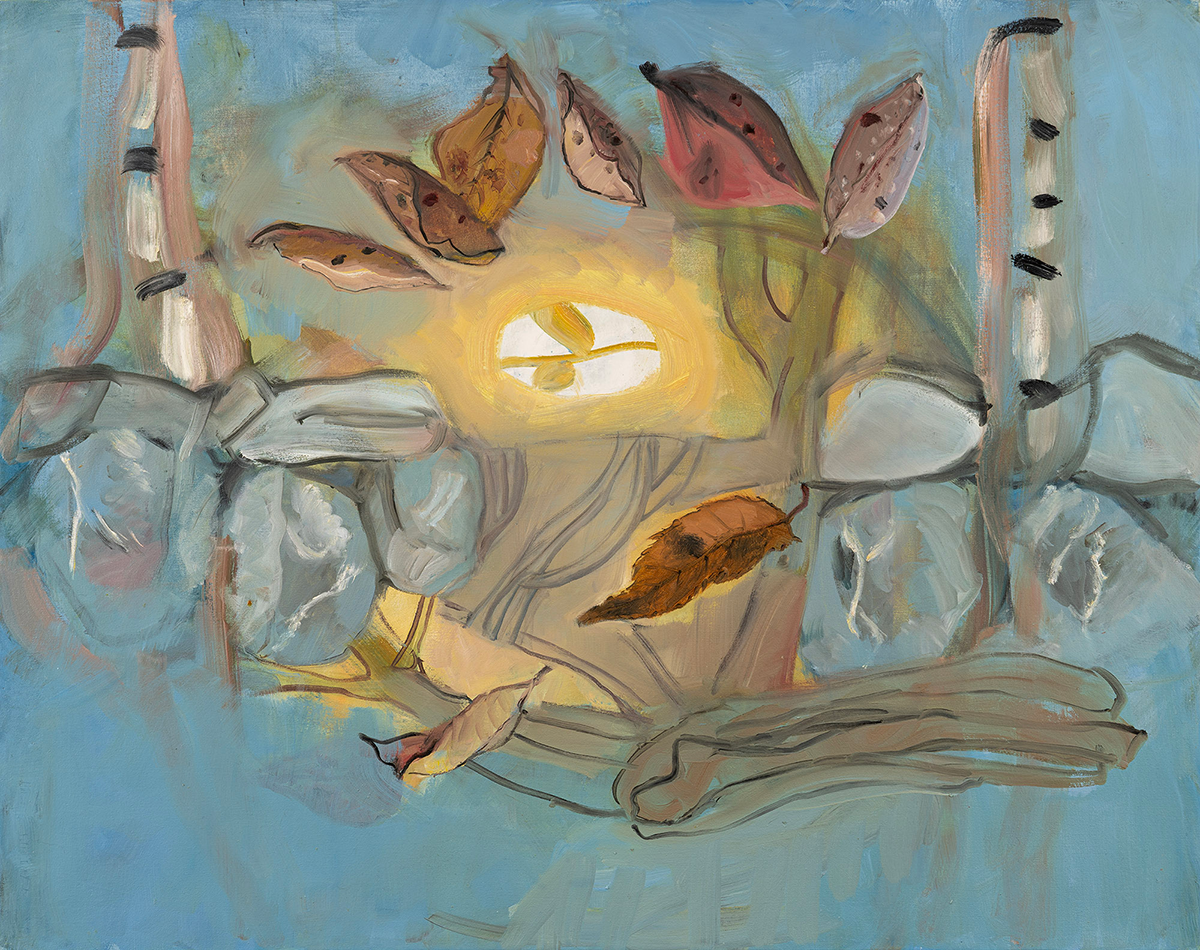
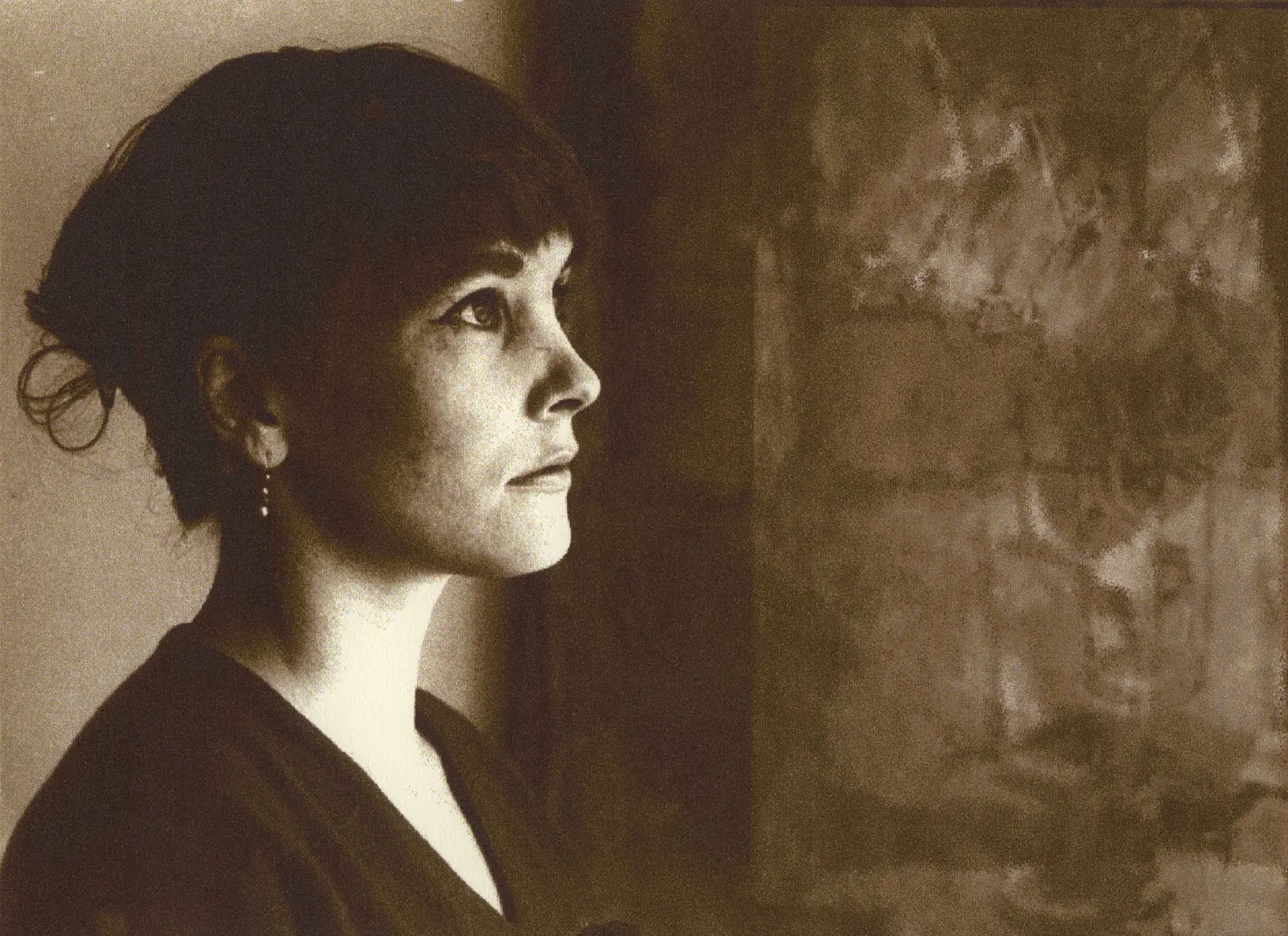
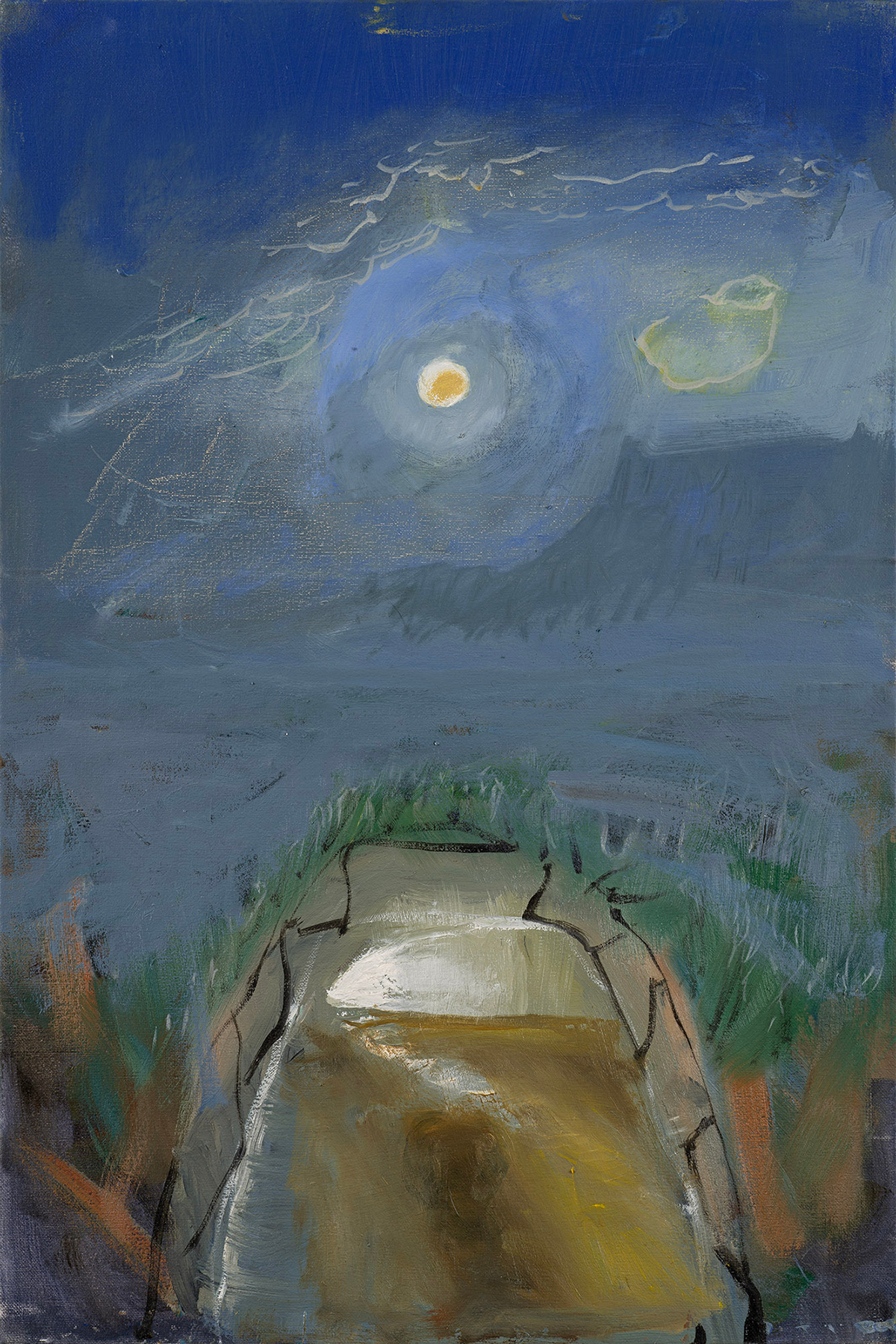
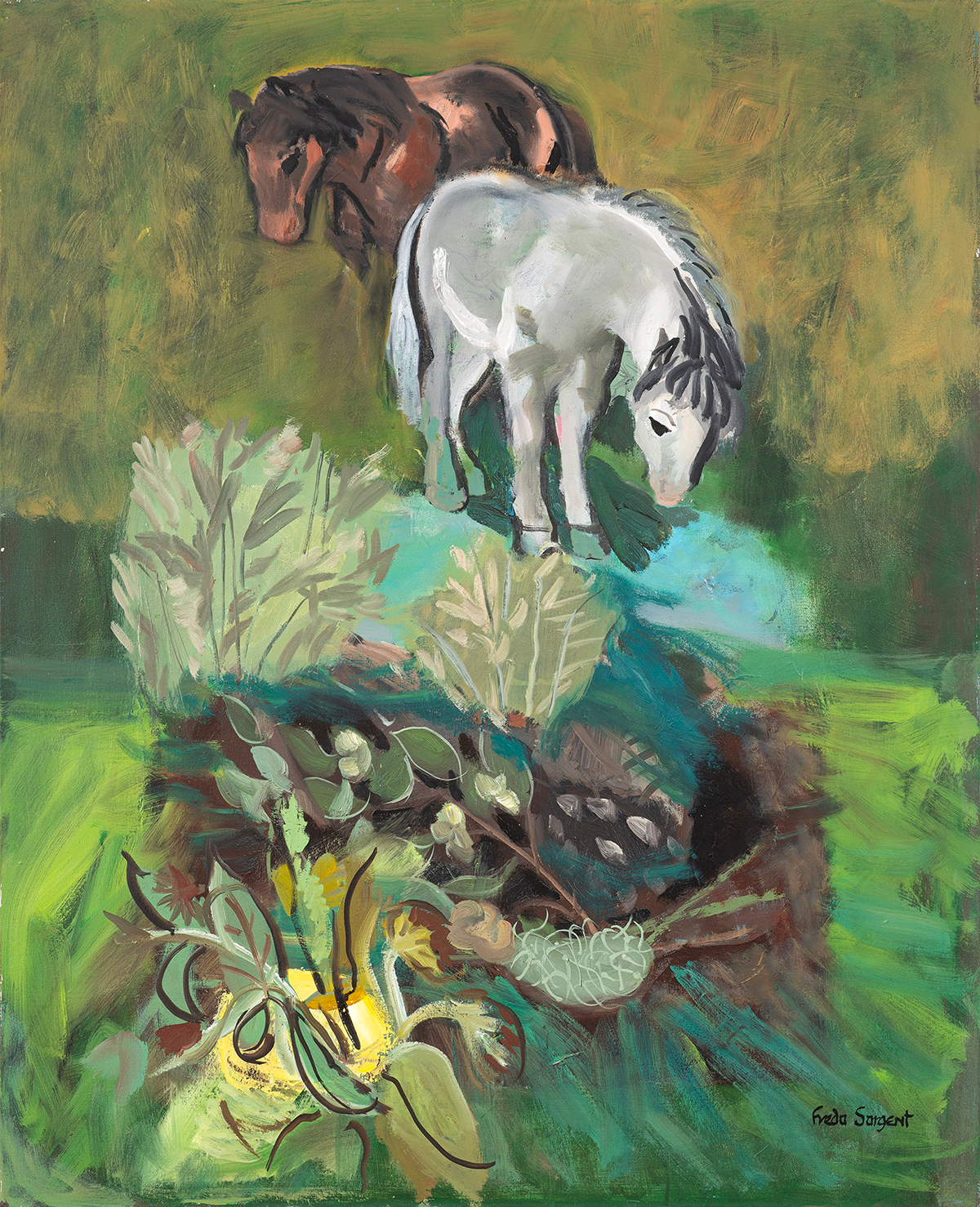
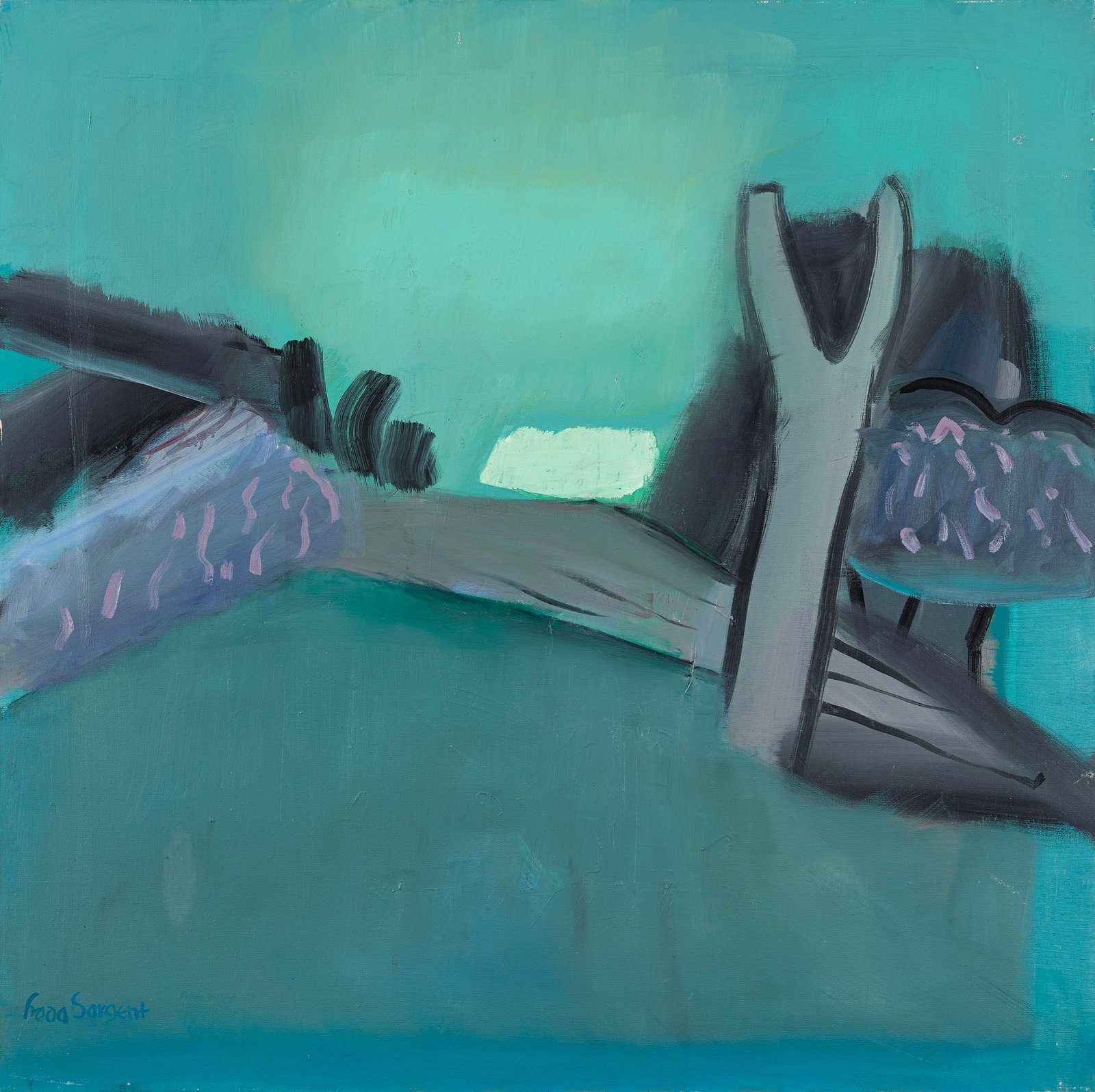
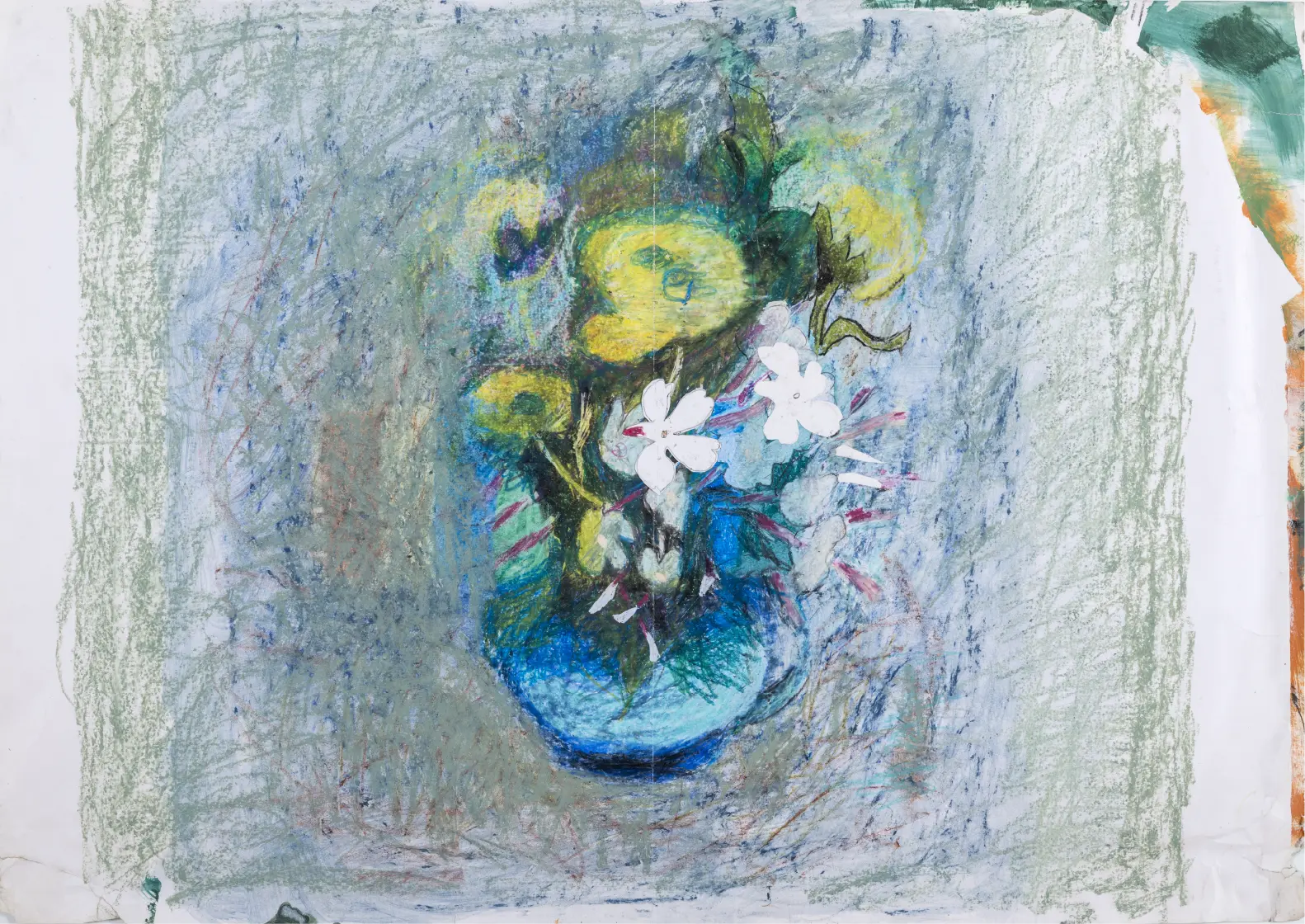
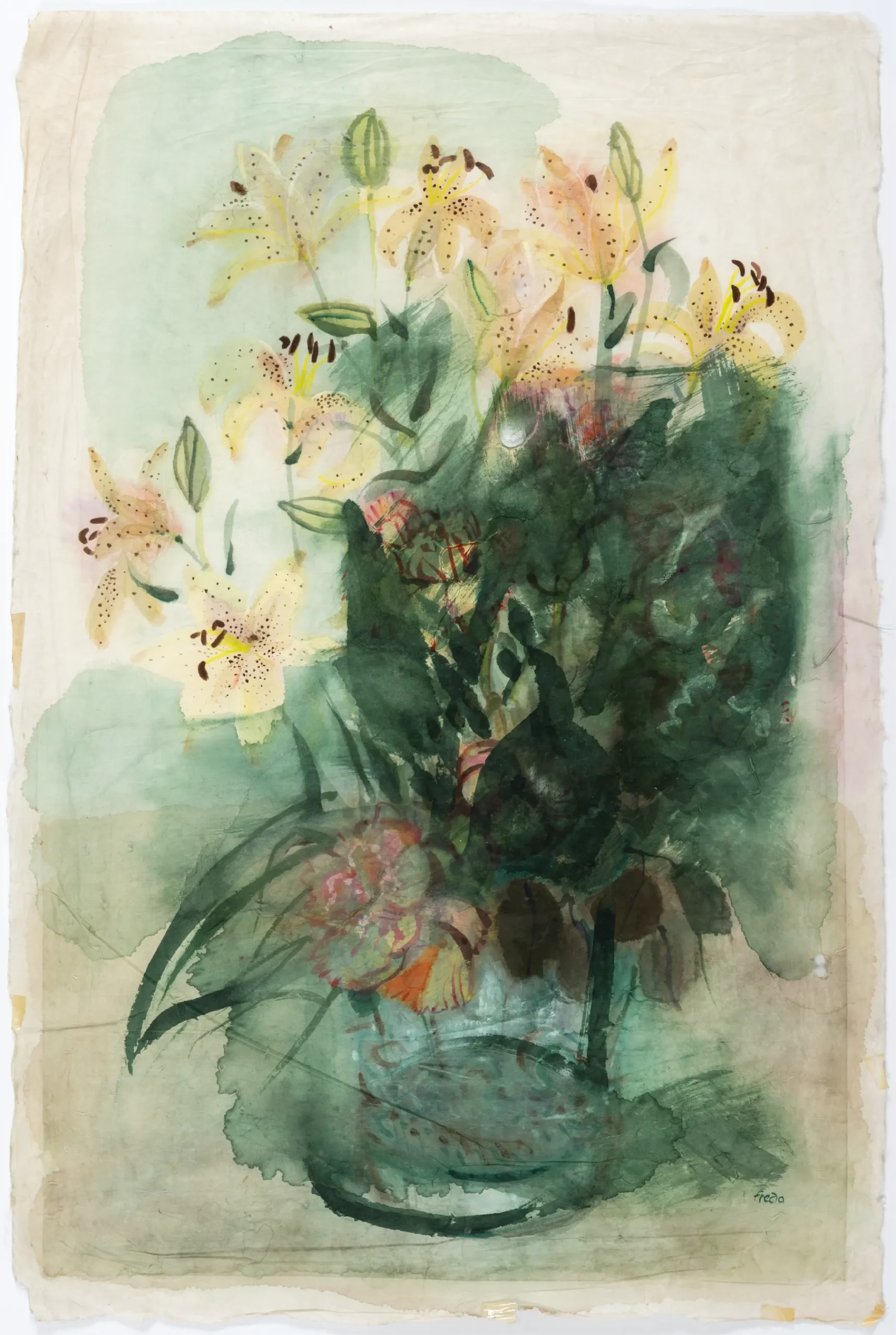
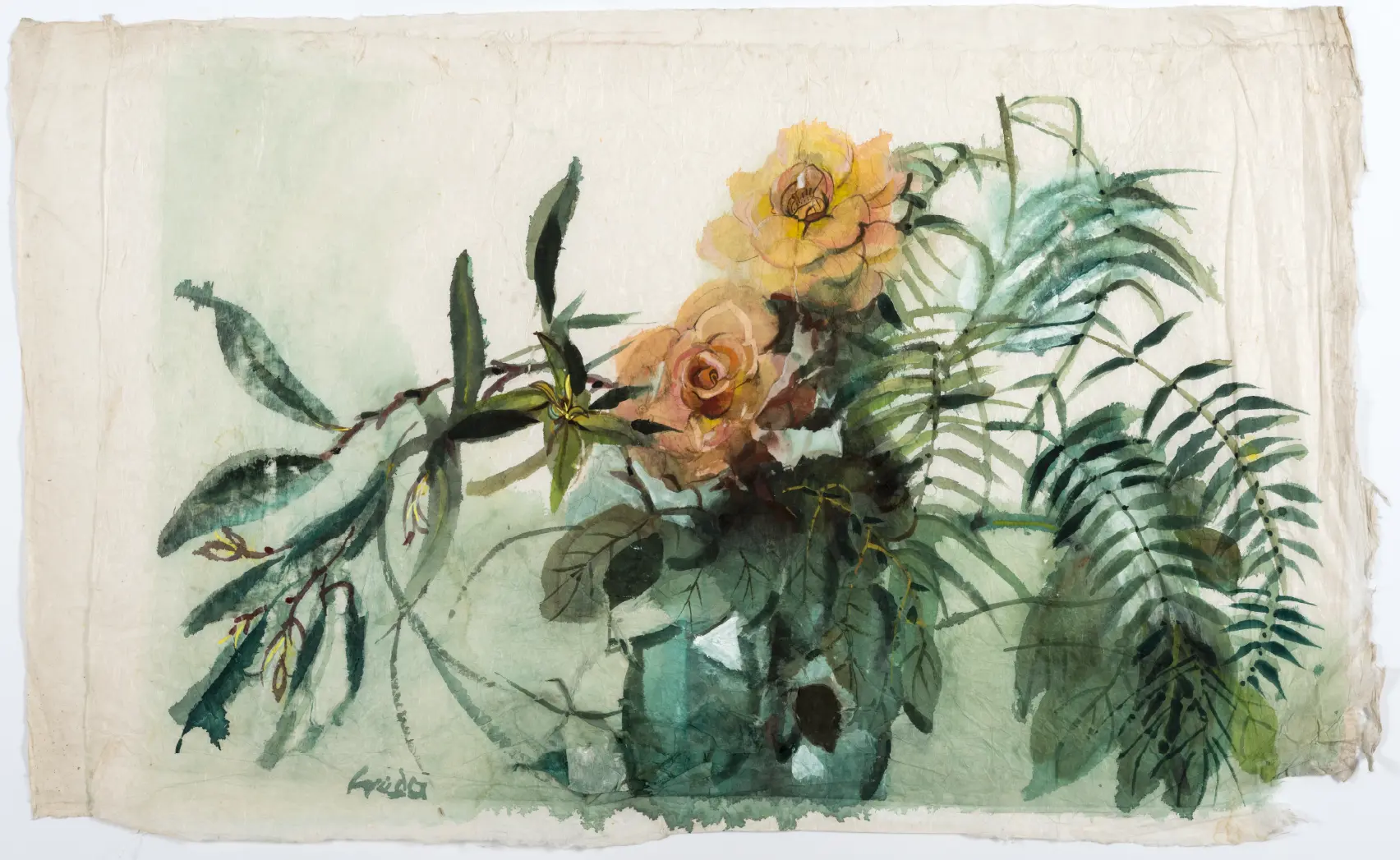
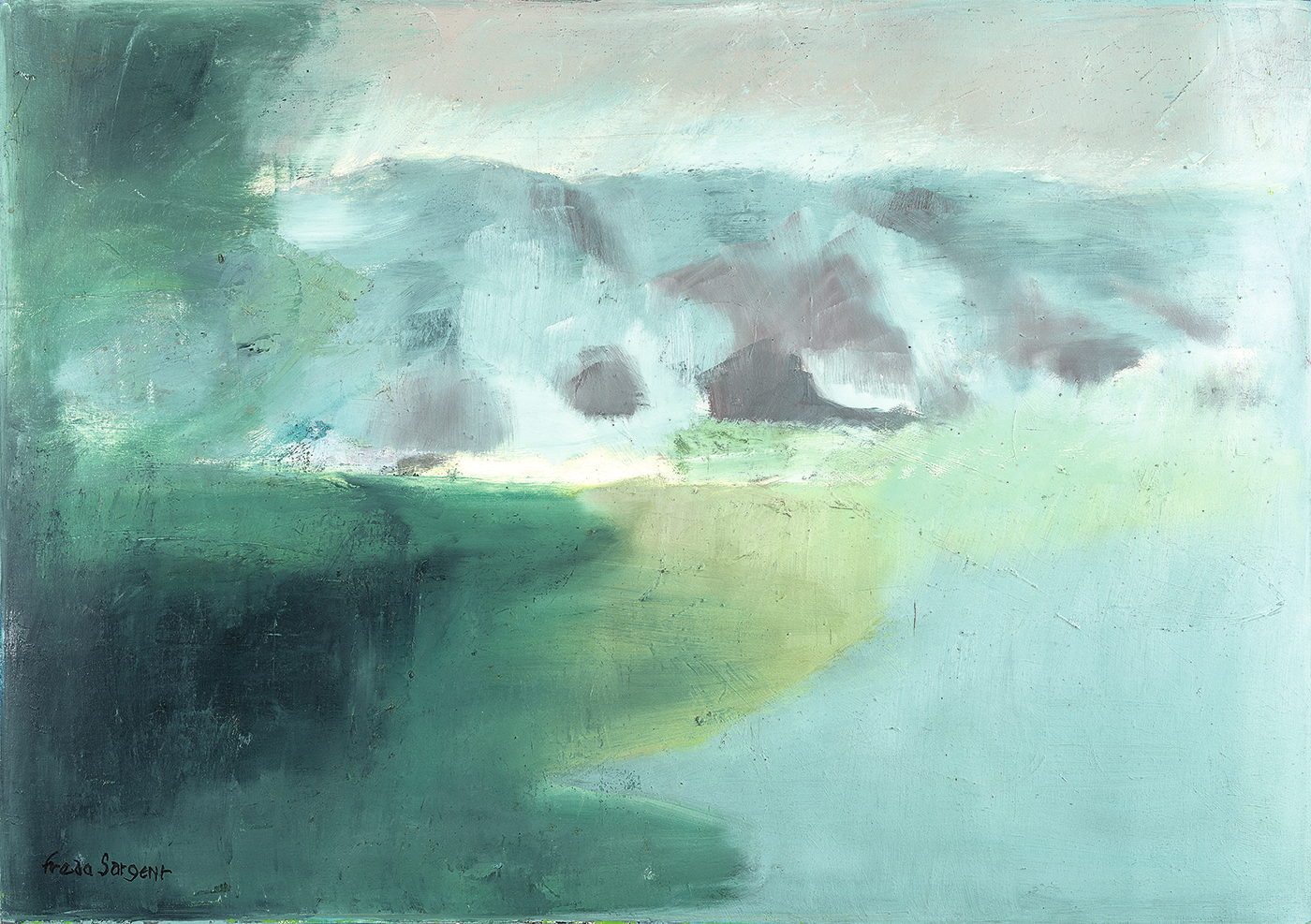
Freda Sargent ocupa un lugar excepcional dentro de la modernidad tardía precisamente porque su obra resiste cualquier adscripción a movimientos, escuelas o categorías. Graduada del Royal College of Art en Londres, Sargent ha logrado construir un lenguaje propio —ni figurativo ni abstracto— sostenido por un profundo involucramiento emocional con todo lo que pinta.
En su trabajo confluyen memoria, experiencia y una imaginación alimentada por su “doble vida” entre Inglaterra y Colombia, una tensión entre interioridad y exterioridad que produce una pintura que no representa la realidad, sino que la transforma en una forma única de abstracción emocional. Lejos de responder a tendencias o genealogías estilísticas, Sargent concibió desde muy temprano un camino íntimo, largo y deliberadamente reflexivo, que se afirma en su autonomía y en la capacidad de la pintura para convertir el tiempo vivido en presencia.
Esta insistencia en un lenguaje propio subraya también el lugar históricamente precario que han ocupado las mujeres dentro de la historia del arte. Nacida a finales de los años veinte, Sargent pertenece a una generación de artistas para quienes la visibilidad fue excepcional, y su obra se inscribe en ese espacio liminal en el que muchas mujeres quedaron fuera de los relatos dominantes de la modernidad. Sin embargo, lejos de neutralizar su identidad —como hicieron tantas artistas obligadas a borrar o suavizar el género para ser aceptadas— Sargent afirma una sensibilidad radical, marcada por la memoria, la intuición y una relación íntima con los sujetos y paisajes que aborda. Su pintura actúa como una operación de recuperación: hace visible lo que la memoria guarda, lo que el tiempo desplaza y lo que solo puede emerger en la superficie de la tela mediante una mirada profundamente personal y persistentemente libre.
Freda Sargent occupies an exceptional place within late modernism precisely because her work resists any affiliation with movements, schools, or categories. Although a graduate of the prestigious Royal College of Art in London, Sargent forged a language entirely her own—neither figurative nor abstract—sustained by a profound emotional engagement with everything she paints. Her work brings together memory, experience, and an imagination shaped by her “double life” between England and Colombia, generating a productive tension between interiority and exteriority that transforms reality into a singular form of emotional abstraction.
Far from responding to trends or stylistic genealogies, Sargent defined from very early on an intimate, protracted, and deliberately reflective path—one anchored in her autonomy and in painting’s capacity to convert lived time into presence. This commitment to a personal language also underscores the historically precarious position women have occupied within the history of art. Born in the late 1920s, Sargent belongs to a generation of artists for whom visibility was the exception, and her work inhabits the liminal space to which many women were relegated within dominant narratives of modernity. Yet rather than neutralize her identity—as so many artists were compelled to erase or soften their gender to gain acceptance—Sargent asserts a radical sensibility shaped by memory, intuition, and an intimate rapport with the subjects and landscapes she approaches. Her painting functions as an act of recovery: rendering visible what memory safeguards, what time displaces, and what can only surface on the canvas through a profoundly personal and insistently free gaze.